Palm Jumeirah is a large artificial island in Dubai, constructed in the early 2000s as part of the city’s coastal development strategy. Shaped like a palm tree, it consists of a central trunk, 16 fronds, and a surrounding crescent breakwater designed to protect the island from waves.
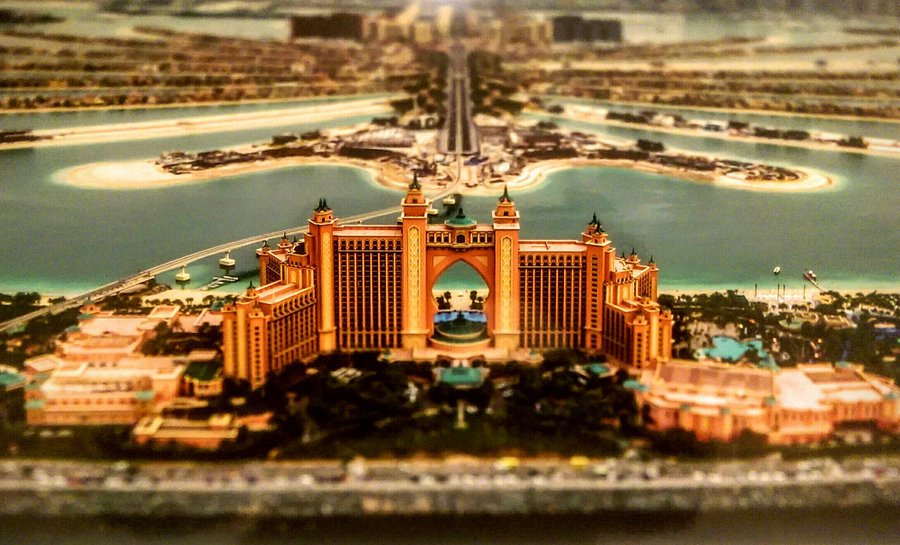
The island was developed by Nakheel and is primarily residential, hospitality, and leisure-focused. Palm Jumeirah is fully integrated into Dubai’s urban infrastructure and is accessible by road, monorail, and water transport.
Structure and Layout
- Trunk: The central axis of the island, home to apartment buildings, hotels, restaurants, shopping areas, and the Palm Monorail.
- Fronds: Residential zones mainly consisting of private villas with direct beach access.
- Crescent: A protective breakwater hosting luxury resorts and hotels, including large-scale beachfront properties.
The crescent not only serves as a wave barrier but also creates a continuous coastal zone for resorts and leisure facilities, separating the island from the open sea.
Key Attractions
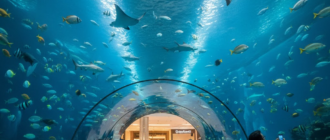
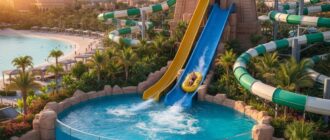
- Atlantis, The Palm: A landmark resort featuring Aquaventure Waterpark, The Lost Chambers Aquarium, restaurants, and entertainment venues.
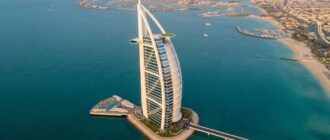
- Atlantis The Royal: A modern luxury resort known for its architectural design, dining concepts, and beachfront location.
- Palm West Beach: A public beachfront area with restaurants, walking paths, and city skyline views.
- Nakheel Mall: A shopping and entertainment complex located on the trunk of the island.
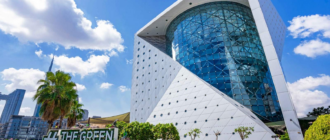
- The View at The Palm: An observation deck offering panoramic views of Palm Jumeirah and the Dubai coastline.
Living on Palm Jumeirah
Palm Jumeirah is considered one of Dubai’s most prestigious residential areas. Properties include beachfront villas, luxury apartments, and serviced residences. The area is known for controlled access, private beaches, and proximity to high-end services.
Daily life on the island is quiet compared to central Dubai districts, but residents rely heavily on private transport due to limited pedestrian connectivity between zones.
Transportation and Access
- Road Access: Via Sheikh Zayed Road and dedicated bridges.
- Palm Monorail: Connects the trunk to Atlantis on the crescent.
- Water Transport: Water taxis and private boats operate around the island.
Visitor Information
- Admission: Free access to public areas; paid entry for attractions and resorts
- Best Time to Visit: Morning or sunset for views and lower temperatures
- Best For: Resort stays, dining, beaches, sightseeing
- Location: Dubai, United Arab Emirates
Palm Jumeirah is not a traditional tourist attraction but a mixed-use district combining residential life, hospitality, and leisure. It represents Dubai’s large-scale approach to urban and coastal development rather than a standalone sightseeing destination.