In the premium segment, packaging is never just a container. It is part of the product experience, part of the brand language and often the first physical interaction a customer has with a company. Before a product is opened, used or gifted, the packaging has already created an impression.
That is why many premium brands treat packaging not as a minor expense, but as a strategic branding tool. Material, structure, print quality, texture, handle type, color and even the way a paper bag keeps its shape can influence how customers perceive the value of a product.
Paper packaging plays a strong role in this process because it combines functionality, visual flexibility and tactile appeal. When designed and produced correctly, paper bags, boxes and other paper-based formats can support a premium brand image without excessive decoration or unnecessary complexity.
Premium Starts Before the Product Is Opened
A premium customer experience begins before the product itself is used. It starts when the customer receives the purchase.
In fashion retail, cosmetics, specialty food, cafés, bakeries, pharmacies and boutique stores, packaging becomes part of the buying ritual. A well-structured paper bag with clean printing and a comfortable handle can make a purchase feel more considered and refined. Poorly made packaging, on the other hand, can weaken the perception of quality even when the product itself is strong.
Customers may not consciously analyze paper density, printing accuracy or handle construction, but they immediately feel whether packaging looks refined or cheap, balanced or careless, premium or generic.
In other words, packaging communicates before the brand says anything.
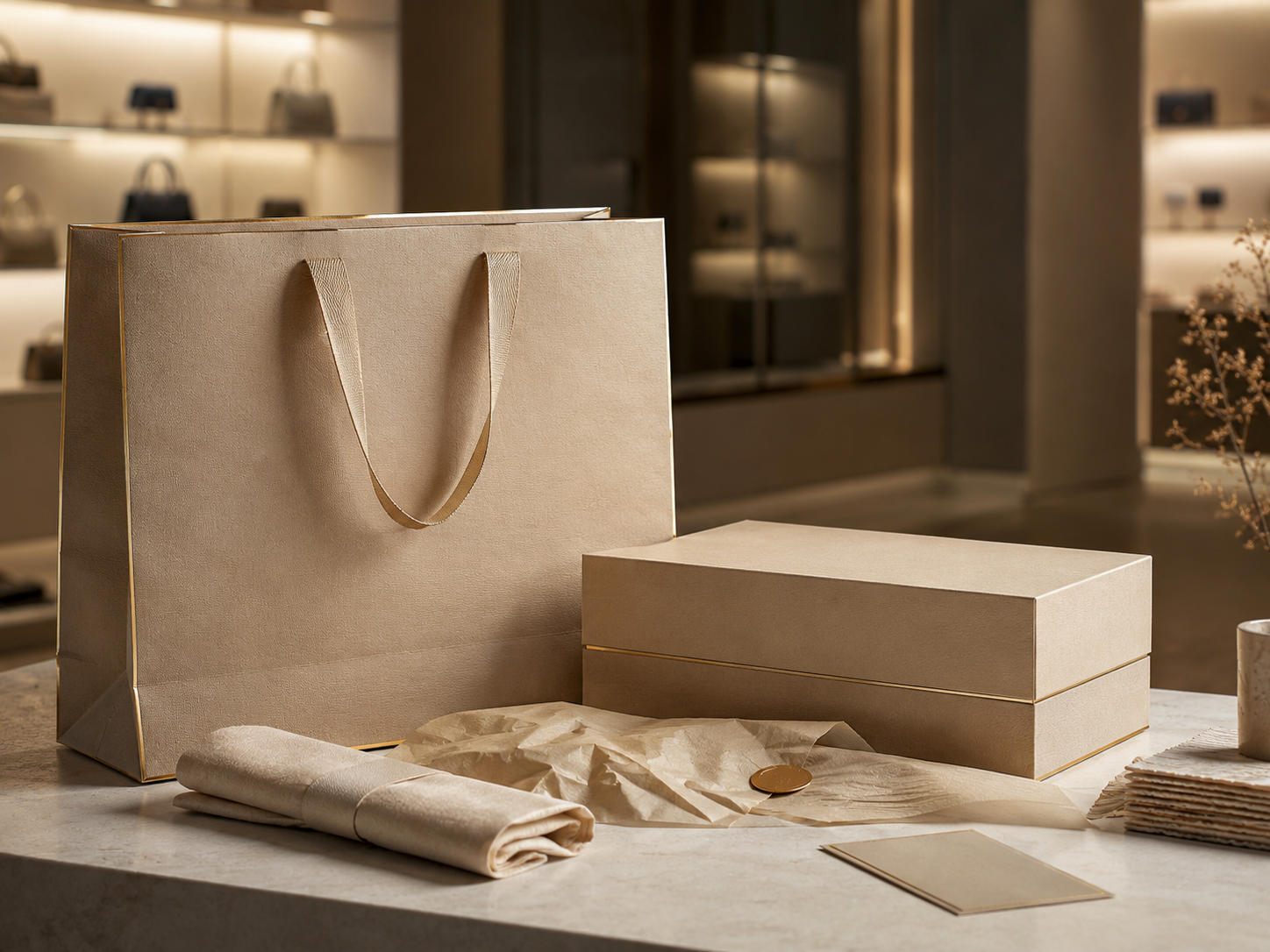
Why Paper Works Well for Premium Brands
Paper packaging has several qualities that make it suitable for premium positioning.
First, paper has a natural tactile presence. Customers hold it, carry it, open it and sometimes reuse it. The texture, thickness and rigidity of the material create a physical impression of quality. A strong paper bag that keeps its shape feels very different from a thin, unstable package.
Second, paper offers strong visual flexibility. It can support minimalist branding, bold color systems, subtle patterns, monochrome designs, premium finishes and clear typography. This makes paper packaging a natural extension of a brand’s visual identity.
Third, branded paper packaging works in public spaces. A paper bag does not disappear after checkout. It moves with the customer through shopping malls, streets, offices, hotels, events and homes. In this way, packaging becomes a mobile brand carrier.
For premium brands, this visibility matters. A customer carrying a well-designed paper bag is not just transporting a product. They are also carrying a visual signal of taste, quality and brand affiliation.
Premium Does Not Always Mean Decorative
One common mistake in premium packaging is the belief that a luxury impression requires complexity. In reality, many strong premium designs are based on restraint.
Clean proportions, accurate logo placement, balanced margins, quality printing and a controlled color palette can be more effective than overloaded graphics or excessive finishing. Because paper already has its own texture and material character, it does not always need heavy decoration.
For brands, the key question is not “How do we make the packaging look expensive?” but “How do we make the packaging feel consistent with the product and the brand?”
Premium perception is built through consistency.
Structure Matters as Much as Design
In paper packaging, design is only part of the result. Structure is just as important.
A premium paper bag must look good, but it must also perform. It should hold the product safely, remain stable when carried, support the expected weight and keep its shape throughout the customer journey. The handle should feel reliable, the bottom should match the product, and the seams and edges should be clean.
This is especially important for food businesses, bakeries, takeaway formats, cosmetics, gifts and fashion retail. If packaging looks premium but performs poorly in real use, the customer experience suffers.
Good paper packaging is not only about how it looks in a photo. It is about how it behaves in real life.
Paper Packaging as a Brand System
Premium brands often need more than one type of packaging. They need a system.
A fashion retailer may need paper bags in several sizes. A cosmetics brand may require small branded bags, gift packaging and protective inserts. A bakery may use paper bags with windows, takeaway bags and custom formats for specific products.
The same visual identity can be adapted across different paper formats while keeping the brand recognizable. Logo placement, color, typography, material choice and finishing details help create a consistent customer experience across multiple product categories.
For premium brands, this consistency is valuable. It helps customers associate every purchase with the same level of quality.
Choosing the Right Paper Packaging Partner
When selecting paper packaging, brands should consider product type, weight, customer journey, retail environment, delivery conditions and brand positioning. Packaging for cosmetics will not have the same requirements as packaging for bakery products, clothing, takeaway food or gifts.
Production quality is also critical. Even a strong design can fail if the material, printing, assembly or structure are not executed properly.
This is why many companies prefer to work with specialized manufacturers rather than treating packaging as a standard commodity. VITA GROUP produces paper packaging solutions for retail, food businesses, cosmetics, pharmacies, fashion brands and e-commerce companies, helping brands adapt material, format, handle type, printing and structure to specific product and customer experience requirements.
Conclusion
Paper packaging has become an important tool for brands that want to combine function, presentation and customer experience. Its value is not limited to appearance or sustainability. Its real strength lies in the way it connects material, design, structure and brand perception.
For premium businesses, the right paper packaging can create a stronger first impression, support a consistent visual identity and improve the customer experience after purchase.
That is why paper packaging should not be treated as an afterthought. For premium brands, it is one of the most visible and tangible expressions of the brand itself.